Bridging the Gap Between Medicine and Manual Therapy: A Clinician’s ViewReview: Dynamic Myofascial Release Course at RSM International Academy
Making a career pivot in your 40s or 50s is daunting, especially when coming from a structured medical background like physiotherapy or clinical rehabilitation. I spent years in environments where protocols were rigid and "hands-on" time was often limited. I wanted to transition into a practice where I could actually touch and heal patients, but I was skeptical of massage schools. I worried about encountering pseudoscience or vague "energy work."
I enrolled in the Dynamic Myofascial Release Course at RSM International Academy because of the instructor’s credentials, but I stayed because of the rigor. This wasn't a workshop; it was an advanced clinical seminar. It felt like stepping into a new specialized profession—one that respects anatomy, biomechanics, and sports medicine at the highest level.
Anatomy Without the Fluff
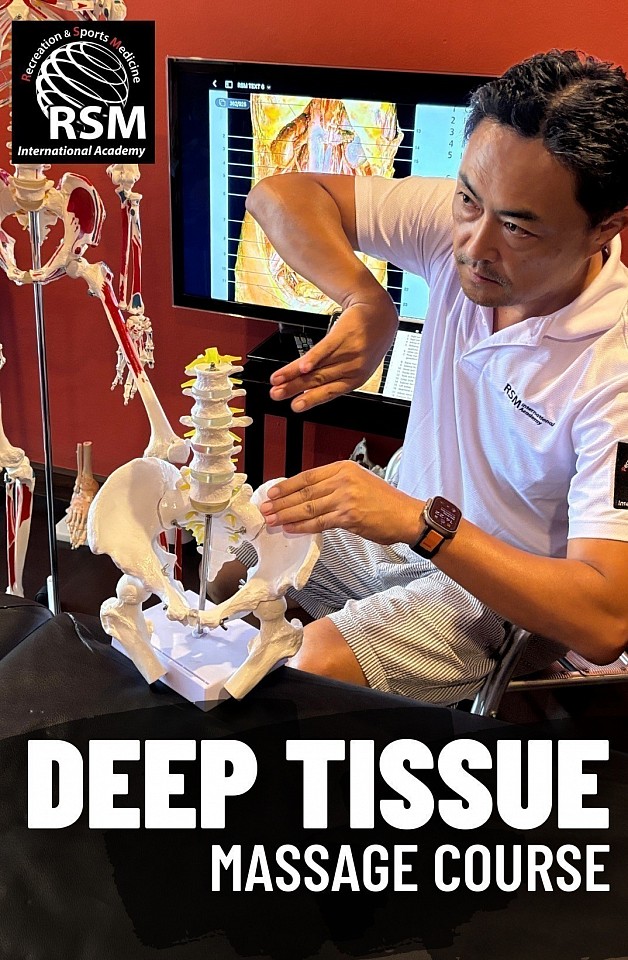
For a medical professional, the most refreshing aspect was the depth of exploring fascia anatomy and function. We didn't just look at cartoons of muscles; we analyzed high-resolution cadaver images and layered diagrams to understand the sliding mechanisms of the body.
Hironori Ikeda (MSc Sports Medicine) teaches with the precision of a university lecturer. Seeing the deep fascia separate into layers and observing the path of the sciatic nerve through the deep gluteal space validated what I had learned in textbooks but rarely visualized in such a practical way. It gave me the confidence to know exactly how to identify fascial restrictions—distinguishing between a muscle spasm and a fibrotic adhesion, which is crucial for effective treatment.
Mechanism of Action: Why It Works
The course fundamentally changed my understanding of mobility. In traditional rehabilitation, we often prescribe stretches. However, this training highlighted the critical difference between myofascial release vs traditional stretching.
I learned that if the deep fascia is adhered or nerve gliding is compromised, static stretching often fails or irritates the structure. By improving mobility with myofascial release first—specifically targeting the intermuscular septa and nerve pathways—we saw immediate functional gains. Watching a restriction resolve in seconds because we treated the fascial line rather than just forcing the joint was a "lightbulb moment" for my clinical reasoning.
Addressing Complex Pathologies
The curriculum is incredibly relevant to the cases we see in clinical practice. We moved far beyond general relaxation, focusing on myofascial release for chronic pain syndromes that often frustrate standard medical management.
We explored targeted protocols, such as myofascial release for plantar fasciitis, treating it not as an isolated foot issue but as a kinetic chain dysfunction involving the calf and posterior thigh. We even covered niche areas like myofascial release for jaw tension, which has become invaluable for my patients suffering from stress-related TMJ dysfunction—an area often ignored in general PT.
The Nerve Connection
A standout feature for me was the integration of neurodynamics. In the hospital, nerve glides are often a separate, cautious exercise. Here, they were integrated into the manual technique. Understanding how to manually facilitate nerve gliding between fascial layers changed how I approach entrapment syndromes. It bridged the gap between neurology and soft tissue work in a way I hadn't seen before.
Professional Environment
The class composition—including other physiotherapists and experienced trainers—created a high-level learning environment. There was no "fluff." Every technique had a biomechanical explanation. For a mature practitioner, this efficiency is key. We need skills that work reliably and protect our own bodies from burnout.
Conclusion
If you are a medical professional or experienced clinician looking to transition into private manual therapy, this is the course you need. It offers evidence-based myofascial training that honors your medical background while equipping you with the hands-on skills that standard clinical education often lacks. It is the most clinically meaningful training I have taken in my career.